Nuance — May 14, 2026
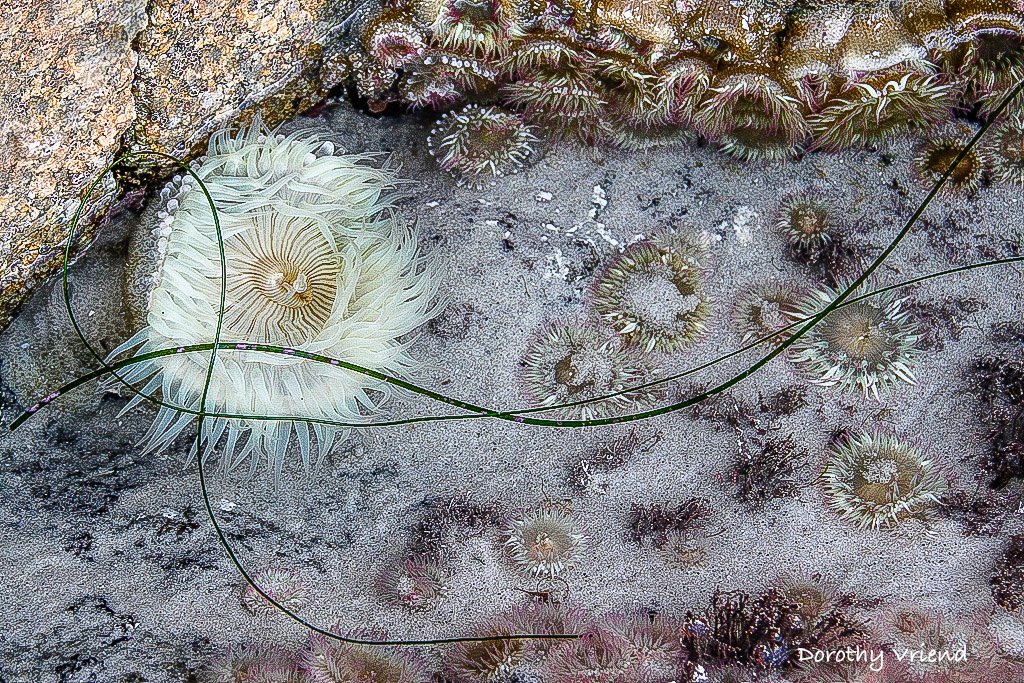
Sea Anemones in an Asilomar Tide Pool
“Consistency requires you to be as ignorant today as you were a year ago.” Friedrich Nietzsche
Nuance in writing generally means exploring the gray areas of life, where so much of our conflict really lies. Though we seem to be steering away from these areas in political discourse these days, in literature they’re gold. Life isn’t just black and white. The gray areas are full of complexity; they are where surprises live.
Author and blogger Chuck Wendig believes storytelling should reflect the “messy, multifaceted nature of reality.” In real life people don’t always know what they think or how they feel about a subject. They may find two opposing ideas credible and act on either one depending on circumstances. Readers love following characters into the murky depths they themselves may have only contemplated.
While they may try on different ideas, people also change their minds. We should change our minds if we learn better, right? Isn’t that what growth is all about? Characters change and grow like people; that’s what makes a story.
Nuance is important on a more granular level too: word choice. Is someone feeling jittery or on edge? Afraid or spooked? The right adjective sets the tone. Verbs do too. Think of the man who canes his way slowly to the bus bench, then stoops to clean it with his handkerchief before lowering his body onto the cold metal. He didn’t just walk to the bus bench and sit down.
Nuance adds depth and complexity to your writing. To life too. It keeps the wheels turning.