Suspense — March 16, 2026
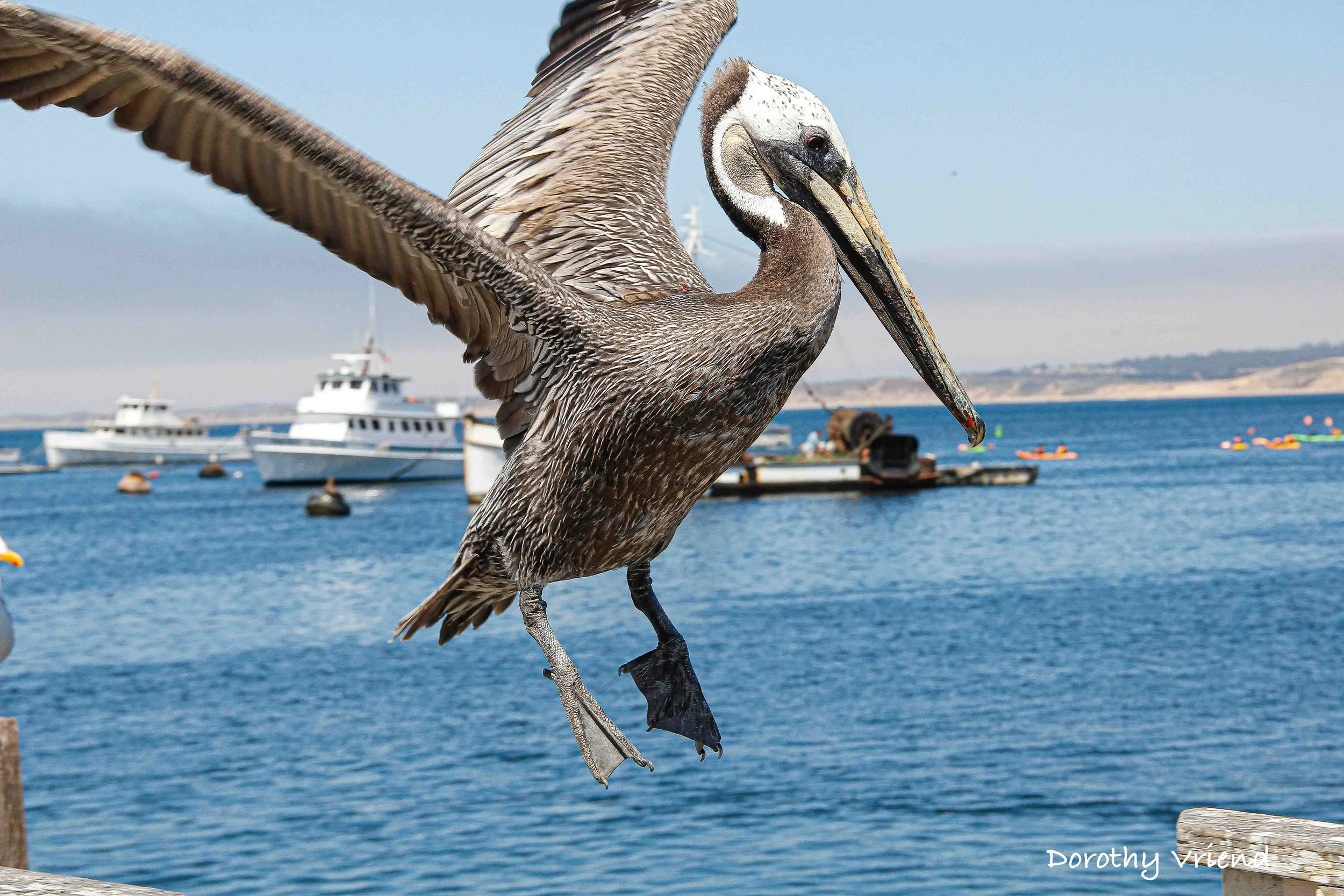
Brown Pelican at Fisherman’s Wharf, Monterey CA
”Suspense is achieved by information control: What you know. What the readers know. What the characters know.” — Tom Clancy
As the author, you know what your plot points are and how they fit into the whole picture – how they build to the story’s climax and resolution. But it’s how you structure the telling of it that builds suspense. Give readers enough information to get them interested but leave burning questions that will require them to read on.
Delay the reveals in major turning points when you can. Build up to them. Leave hints, maybe even some red herrings. Carry on with another part of the story and create more questions that will linger when readers get answers to earlier ones. Keep your readers hungry.
One structural tool that can help is to have a non-linear timeline. You can offer bits of the story in the early chapters but save the context for later chapters as you toggle back and forth in time. To see the whole picture, readers will just have to keep turning the pages.
You can also create suspense with a linear timeline, using mood or imagery to foreshadow looming danger. Or you can manufacture time constraints that act as a limited opportunity to stave off impending disaster. Another method I like to use is to let my readers know more than my characters do. Isn’t that cringe-worthy? Watching a character make a move that a reader can see is bad, but the character can’t?
And don’t forget — your protagonist’s own angst will help sustain tension throughout. Make sure your readers feel it.