Narrative Voice — Jan. 20, 2026
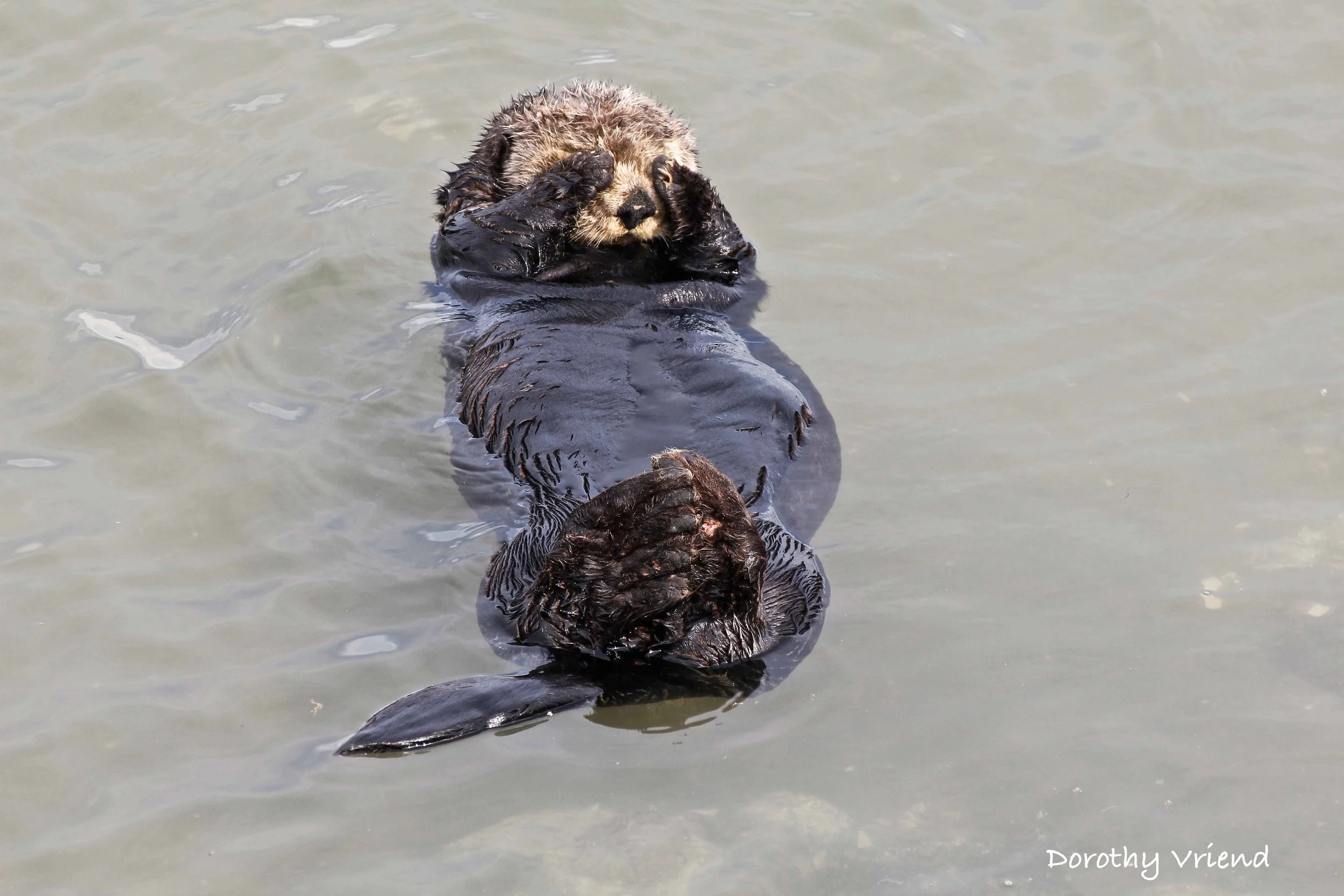
Otter in Elkhorn Slough, Moss Landing, CA
“Kids love books that are irreverent and challenge authority, when authority is arbitrary, greedy or foolish. They also love it when you make fun of grownups, and I've spent my whole life as a writer doing that.” – Carl Hiaasen
The narrative voice of a novel is important. Is it funny? Sarcastic? Nostalgic? Moody? As readers, we have our preferences. I like a moody novel, but I don’t like to be mired in depression. I like a bit of sarcasm, but I don’t want to be hearing from someone who’s completely jaded. I like funny, but my funny bone isn’t tickled by the same things as everybody else.
Think of the people you know and their particular ability to make you laugh, or be optimistic or to feel deeply. The writer’s narrative voice is similar. It is built by their own sense of the world, infused by their sense of humor, their quirks and fantasies, their lived experience.
The narrative voice is the glue that holds a novel together. While linked to the anchoring character’s point of view, it is more than that. It encompasses physical description, context, the passing of time and explanation of unfamiliar concepts. It is also present in the way your character reacts to circumstances.
If, as a writer, you can find your narrative voice and use it consistently, it will finesse your work and give it a feeling of mastery that is uniquely yours.